Our trending topics reflect that we don’t just solve problems; we re-engineer the ecosystems that define your industry. From the classroom to the factory floor, Fortis & Peak delivers the capital and the clarity to lead the economy of the future.
In a global economy defined by volatility, “resilience” has often been misinterpreted as mere survival. At Fortis & Peak, we redefine it. Resilience is not a defensive posture; it is a structural advantage. Our approach to Lean 4.0 and Scope 3 mitigation is built on an architecture that doesn’t just weather the storm—it re-engineers the very ecosystem in which your industry operates.
From the Classroom: The Capital of Clarity
Resilience begins with human logic and institutional knowledge. We bridge the gap between academic theory and industrial application by delivering the “Clarity” required to lead.
To the Factory Floor: The Engine of Net-Zero
The factory floor is where high-level strategy meets physical reality. In the context of Category 4 emissions, resilience means decoupling growth from carbon output.
Defining the Economy of the Future
The economy of the future belongs to those who can prove their value chain is as clean as their balance sheet.


Artificial Intelligence has evolved into the “backbone” of the classroom. Rather than a one-size-fits-all curriculum, AI algorithms now analyse a student’s cognitive pace, emotional engagement, and mastery levels in real-time.

The binary choice between physical and digital learning has vanished. The 2026 “Phygital” model blends hands-on physical building with high-fidelity digital simulations.

With the job market evolving rapidly, K-12 schools are pivoting away from year-long static courses toward modular, skill-based “nanodegrees” or micro-credentials.

The industry has moved beyond static dashboards that simply “report” data. In 2026, Agentic AI—systems that can reason, plan, and take autonomous action—is the new standard for the factory floor.

2026 is the year Physical AI—AI embedded into mobile, versatile hardware—goes mainstream. This marks the transition from “Line Robots” to “Service Robots.”

Sustainability in 2026 is no longer a marketing “add-on”; it is a Productivity Lever.
The global “Just-in-Time” supply chain of the 2010s was built on the assumption of endless, cheap primary materials. 2026 has proven that assumption false.
Companies are encouraged to keep materials within their own regional ecosystem. “Waste” is now treated as a Strategic Asset that must be kept onshore to fuel local manufacturing transformation.

The world is defined by “Resource Nationalism,” and access to primary raw materials is increasingly weaponized.
Fortis & Peak Insight: For our investment clients, this means a massive capital shift toward midstream processing and recovery infrastructure located within “friendly” trade blocs (friend-shoring).
Recent data from the Circularity Index 2026 reveals that 47.5% of major industrial firms still have zero quantitative targets for “Value Retention” (Repair/Remanufacture). They are stuck in a recycling-only mindset, leaving billions in potential value on the table. Recent data from the Circularity Index 2026 reveals that 47.5% of major industrial firms still have zero quantitative targets for “Value Retention” (Repair/Remanufacture). They are stuck in a recycling-only mindset, leaving billions in potential value on the table.
Sustainability and Circular Economy Integration have evolved from a series of pilot projects into a mission-critical industrial strategy. Organizations are no longer viewing “circularity” as a standalone ESG initiative, but as a core “operating system” designed to manage resource scarcity and geopolitical risk.
Here are the two dominant trends defining the landscape for Fortis & Peak clients in 2026.
The regulatory floor has risen significantly. The adoption of the EU Circular Economy Act (CEA) in late 2026 has established a new “Single Market” for secondary raw materials.
Agentic AI has solved the “Complexity Gap” that once made circularity expensive.

In 2026, the highest tier of service is the one the customer never has to ask for. We have moved from Reactive to Predictive CX.

As AI automates 80% of routine transactions, the role of the human agent has undergone a radical transformation.

With the 2026 mainstreaming of spatial computing (Apple Vision Pro, Android XR), “Customer Experience” has leaked out of the smartphone and into the physical world.

In 2026, AI has transitioned from a “chat interface” to Agentic AI—autonomous digital entities that can plan, execute tasks, and collaborate with humans as “digital teammates.”

The traditional four-year degree is no longer the primary gatekeeper for high-skill roles.

The “9-to-5” loyalist model is being challenged by the rise of the Fractional Expert—highly skilled professionals who provide their services to multiple companies simultaneously.
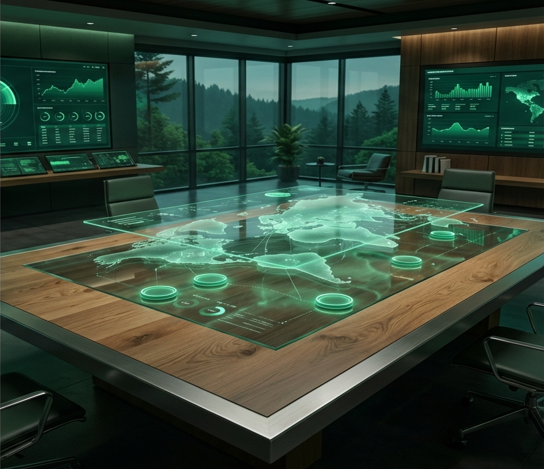
The market has moved past the “Control Tower” (which merely shows you where things are) to Autonomous Orchestration (which fixes problems without human intervention).
Knowing your direct (Tier 1) suppliers is insufficient. Resilience now requires Deep-Tier Visibility (Tier 2, 3, and beyond) to comply with global regulations like the EU Corporate Sustainability Due Diligence Directive (CSDDD).

We don’t just plan for the “Best Case”; we simulate the “Worst Case” every hour.

We have transitioned from “AI as a tool” to Agentic Finance—autonomous AI systems capable of interpreting strategic objectives and executing complex financial workflows without constant human intervention.

The traditional annual budget is officially obsolete in 2026. Leading firms have replaced it with Integrated Business Planning (IBP) powered by real-time data streams.

As AI takes over the “bookkeeping” and “data assembly,” the profile of the finance professional in 2026 has fundamentally changed.

The industry has moved from Quality Control (detecting defects) to Predictive Quality (preventing them).

The era of the “Qualitative Risk Heatmap” is over. In 2026, risk is measured in Real-Time Financial Exposure.

With 2026 marking the first major enforcement cycle of the EU AI Act, compliance has transitioned from a manual audit to a Continuous, Automated Loop.

Leading health systems create a Digital Twin for high-risk patients—a virtual model that mirrors their unique biology, genomics, and real-time lifestyle data.

The “Hospital-at-Home” (HaH) model has matured into a mainstream clinical standard in 2026, supported by Remote Patient Monitoring (RPM).

In 2026, “Personalized Medicine” has expanded beyond simple DNA tests into Multi-Omics—the integration of the genome (DNA), proteome (proteins), and metabolome (metabolism).
The traditional four-year degree is no longer the primary gatekeeper for high-skill roles. In 2026, Skills-Based Hiring has become the global standard for capturing talent in a fast-moving market.
On the radar (2)
SkipThe “Product Passport” for Food Safety
From Reactive Recalls to Real-Time Traceability & Trust
The Rise of “Batch-of-One” Bio-Factories
From Centralized Biomanufacturing to Personalized, Patient-Centric Production.
The "Fortis" Management Shift
The core skill is no longer just managing people, but managing the handoffs between human creativity and AI execution
Managers are being retrained in "Orchestration Leadership."
The human element of your operations and creating high-value Orchestration Leaders.
Mixed-Modality Teams (The New Org Chart)
The leading "Peak" performers are those who have redesigned their departments into Mixed-Modality Teams.
The Adaptive STEM Lab
The challenge in education has shifted from merely providing computers to creating integrated engineering ecosystems.
Gain insights into highly dynamic topics such as technology engineering and its applications in education and healthcare, as well as workforce and talent transformation—among others.
To help us assist you effectively, please include the information below with your message. Your personal data will be handled in line with our Privacy Statement.
Required fields are indicated by an asterisk (*).